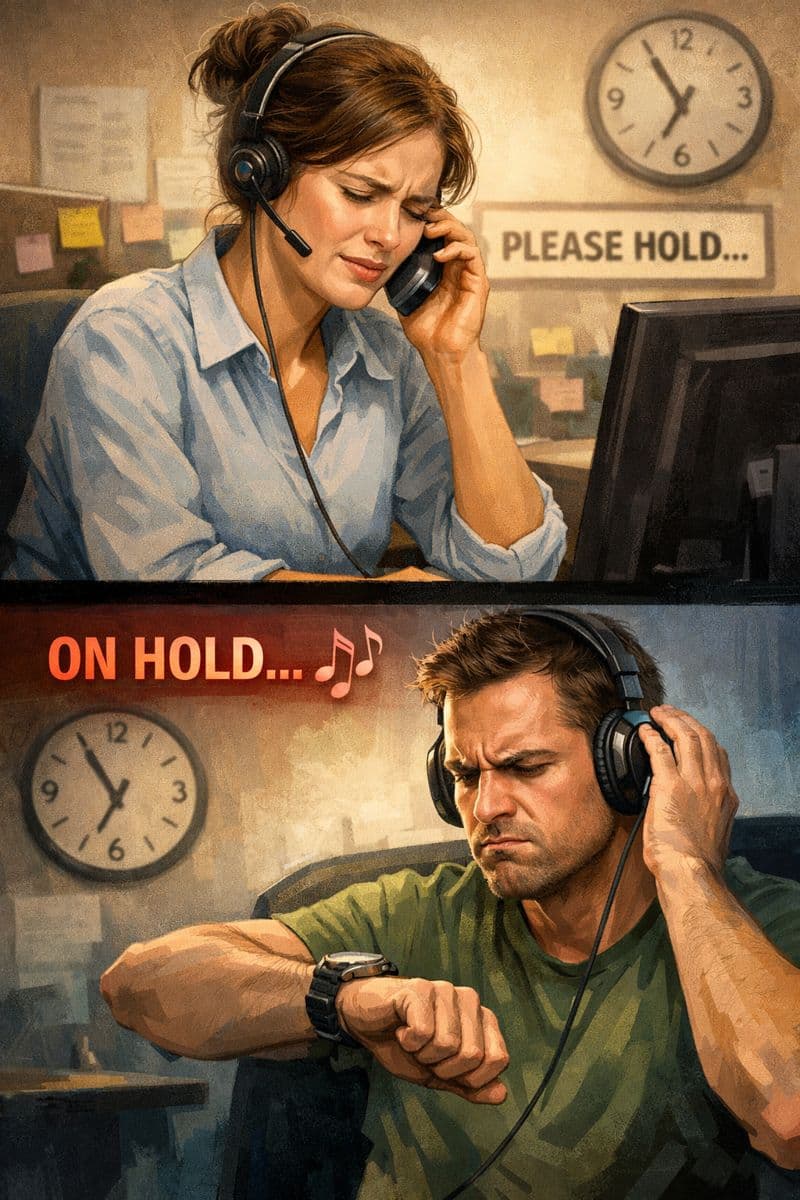
How long before you lose the customer on hold?
If you’re a small business, you probably know this situation well.
You have one phone line.
Maybe two on a good day.
A customer calls.
You answer.
Someone else is already on hold.
The person you’re speaking to starts spelling their email address.
It’s not a bad connection — just not a perfect one.
The email is long. Or unusual. Or both.
You ask them to repeat it.
Then again.
Then again.
While this is happening, someone else is still waiting on hold.
Here’s the uncomfortable truth:
this is often the exact moment you lose a customer.
Not because anyone did anything wrong.
Not because your staff are incompetent.
But because the process relies entirely on voice, patience, and perfect timing.
Customers don’t complain — they disengage
When this happens, customers rarely say:
“This business is understaffed.”
“This person is doing their best.”
What they actually feel is simpler:
“This is harder than it should be.”
They finish the call politely.
They hang up.
They quietly decide not to come back.
From the business side, nothing looks broken.
No complaint.
No bad review.
No obvious churn signal.
The loss is invisible — but real.
This isn’t about call centres
This problem isn’t limited to large call centres.
It affects:
- Trades taking bookings between jobs
- Medical clinics juggling patients
- Accountants during tax season
- Any small team answering phones while multitasking
If you rely on phone calls to capture precise information — names, emails, reference numbers — you are depending on:
- Clear audio
- Shared accents
- Unlimited patience
That’s a fragile system in a noisy, distracted world.
The phone is still useful — but it’s no longer enough
Voice is great for empathy, reassurance, and nuance.
It’s terrible for:
- Spelling
- Numbers
- Unfamiliar names
- Time-critical accuracy
Modern customers are used to typing details quickly and seeing them confirmed instantly. When a process forces everything through spoken repetition, friction builds fast.
And friction kills trust.
The real cost isn’t time — it’s confidence
The biggest loss here isn’t the extra minute on the call.
It’s the moment the customer thinks:
“I’m not confident this will be handled correctly.”
Once that doubt appears, loyalty drops sharply.
Businesses that remove this friction don’t just save time — they keep customers who would otherwise disappear without a trace.
Final thought
If a single awkward moment on the phone can undo an otherwise good interaction, the problem isn’t your people.
It’s the system you’ve asked them — and your customers — to work around.
Invisible friction is still friction.
And it’s usually the most expensive kind.